Cultivated meat could drastically reduce the environmental toll of meat production. Here's why:
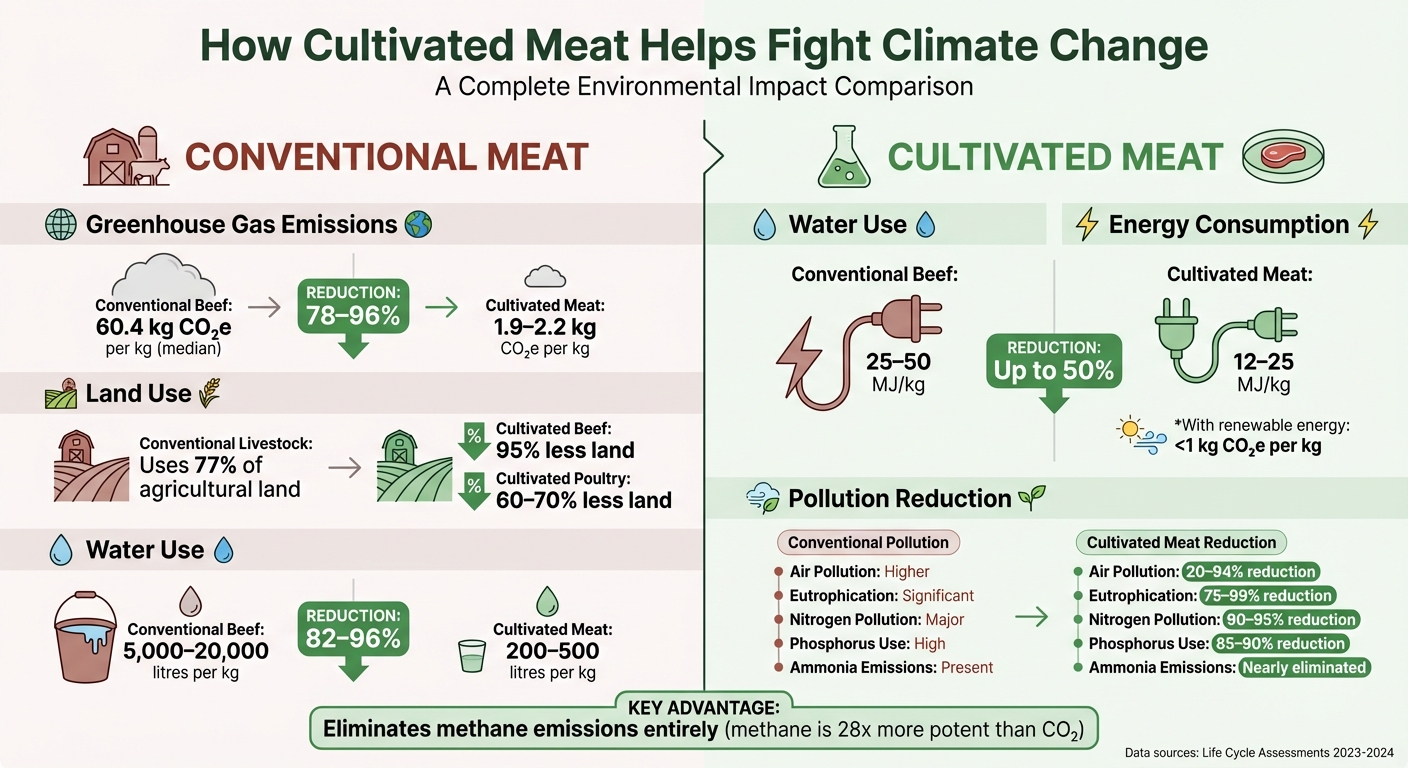
- Emissions: Livestock farming produces 14.5% of global greenhouse gases, with beef generating 60.4 kg CO₂e per kg on average. Cultivated meat slashes this to just 1.9–2.2 kg CO₂e per kg, cutting methane emissions entirely.
- Land Use: Livestock takes up 77% of agricultural land. Cultivated meat reduces land use by up to 95% for beef, freeing space for reforestation.
- Water Use: Producing beef requires 5,000–20,000 litres of water per kg. Cultivated meat uses 82–96% less water.
- Energy Efficiency: With renewable energy, cultivated meat’s carbon footprint could drop to less than 1 kg CO₂e per kg.
This approach bypasses the need to raise and slaughter animals, offering a cleaner, more efficient way to meet global protein demand.
Cultivated Meat vs Conventional Meat Environmental Impact Comparison
How lab-grown meat could help the climate - On the Green Fence
sbb-itb-c323ed3
Greenhouse Gas Emissions: Cultivated Meat vs Conventional Meat
When it comes to climate impact, the numbers speak for themselves. Producing conventional beef generates anywhere between 35 and 432 kg of CO₂e per kg of meat, with the median sitting at 60.4 kg[3]. In contrast, early life cycle assessments for Cultivated Meat suggest emissions as low as 1.9 to 2.2 kg CO₂e per kg[3]. The table below provides a clear comparison of these figures.
What sets these two methods apart is the type of emissions they produce. Conventional farming releases large quantities of methane, primarily from cattle digestion and manure. Cultivated Meat, on the other hand, bypasses these biological processes entirely. Instead, its emissions are mostly carbon dioxide, resulting from the energy needed to power bioreactors and maintain a steady 37°C for cell cultures[1][4].
This difference is more important than it might seem at first glance. Methane, while far more potent than CO₂ - 28 times stronger over a century - has a much shorter atmospheric lifespan of around 12 years. This means that reducing methane emissions could lead to quicker atmospheric cooling, which is crucial for achieving short-term climate goals[1].
Carbon Footprint Comparison Table
| Meat Production Type | GHG Emissions (kg CO₂e per kg) | Potential Reduction with Cultivated Meat |
|---|---|---|
| Conventional Beef (Median) | 60.4[3] | 78–96%[1] |
| Conventional Beef (Mean) | 99.5[3] | 78–96%[1] |
| Cultivated Meat (Projected) | 1.9–2.2[3] | N/A |
A Closer Look at Scope 1, 2, and 3 Emissions
To understand why Cultivated Meat has such a different carbon footprint, it’s helpful to break down the emission sources into Scope 1, Scope 2, and Scope 3 categories.
- Scope 1 covers direct emissions. For conventional farming, this includes methane from cattle digestion and manure. Cultivated Meat avoids these entirely since no animals are involved[1].
- Scope 2 focuses on energy-related emissions. Cultivated Meat's Scope 2 emissions stem from powering different bioreactor designs, maintaining temperature control, and running operations. If renewable energy is used, these emissions can be reduced even further, amplifying its climate benefits[1][4].
- Scope 3 accounts for supply chain activities. For conventional meat, this includes fertilisers for feed crops, machinery, transportation, and significant land-use changes like deforestation. In the case of Cultivated Meat, Scope 3 emissions mainly come from producing growth media components such as amino acids, glucose, and vitamins. Importantly, using food-grade rather than pharmaceutical-grade ingredients keeps these emissions relatively low, ensuring that Cultivated Meat remains a more climate-conscious option compared to conventional beef[3][1].
These differences in emission sources underline the potential of Cultivated Meat to mitigate climate change more effectively than traditional beef production.
Land and Resource Use Reductions
Traditional livestock farming takes up a staggering 77% of global agricultural land, covering around 30% of the Earth's ice-free surface. To put it into perspective, producing a single conventional beef burger requires 2–3 m² of land[1].
By reducing land use, we can not only minimise environmental damage but also tackle climate change. Conventional beef systems yield about 50 kg of meat per hectare each year. In contrast, Cultivated Meat facilities can produce thousands of kilograms per hectare by eliminating the need for grazing and cutting down feed conversion losses[1].
In April 2026, Bene Meat Technologies revealed data from their industrial-scale facility in the Czech Republic, capable of producing 400–600 kg of Cultivated Meat daily. Their Life Cycle Assessment, published in the International Journal of Life Cycle Assessment, showed a land use impact of just 2.4 m²a per kilogram of Cultivated Meat. This figure is on par with - or even better than - conventional chicken production[5]. Such findings offer a clear comparison of land savings across different types of meat.
The extent of land use reductions depends on the type of meat. Cultivated beef, for example, can cut land use by up to 95%, while cultivated poultry achieves savings of 60–70%[1]. The land spared through these methods could be used for reforestation, afforestation, or rewilding efforts, further benefiting the planet.
Land Use Savings Table
| Meat Type | Land Use Reduction vs. Conventional | Key Land Savings Drivers |
|---|---|---|
| Beef | 95%[1] | Elimination of grazing land and vast feed crop requirements |
| Chicken/Poultry | 60–70%[1] | Higher density production and reduced feed-to-protein losses |
| General (Renewable Energy Scenario) | Up to 90%[2] | Optimised industrial footprint and efficient nutrient use |
Water, Energy, and Pollution Benefits
Cultivated Meat offers a dramatic reduction in waste impact, including water use, energy consumption, and pollution levels. For context, producing one kilogram of conventional beef requires between 5,000 and 20,000 litres of water - most of which goes into irrigating feed crops and providing water for livestock throughout their lives[1]. Cultivated Meat bypasses these demands entirely. Thanks to closed-loop bioreactors that recycle water, it slashes water use by 82–96% compared to beef[1]. It also uses 50–70% less water than chicken[1].
Energy consumption also sees a major improvement. Cultivated Meat production requires 12–25 MJ per kilogram, cutting energy use by up to 50% compared to conventional beef, especially when renewable energy sources are used[1][7]. Advances like switching to food-grade systems have reduced equipment costs by 40–70%, making large-scale production more energy-efficient[1].
Pollution is another area where Cultivated Meat shines. Ammonia emissions are almost entirely eliminated[1]. Air pollution from particulate matter and nitrogen oxides drops by 20–94%, as there’s no livestock digestion producing methane and no manure releasing harmful gases[8]. These improvements directly enhance air quality and waterway health, especially in rural areas of the UK where agriculture is a major contributor to environmental issues.
Eutrophication, which leads to algal blooms and "dead zones" in waterways, is reduced by 75–99%[9]. Conventional chicken production, for instance, contributes 10–50 kilograms of nitrogen equivalents per tonne, whereas Cultivated Meat produces less than 1 kilogram[9]. By eliminating manure and significantly reducing the need for fertiliser-heavy feed crops, Cultivated Meat prevents the nitrogen and phosphorus runoff that harms ecosystems like those in the Thames basin. Nitrogen pollution is reduced by 90–95%, and phosphorus use falls by 85–90% compared to conventional beef[1]. These reductions directly align with short-term climate goals by cutting emissions that drive atmospheric warming and degrade ecosystems.
Environmental Impact Metrics Table
| Impact Category | Conventional Meat | Cultivated Meat | Reduction |
|---|---|---|---|
| Water Use | 5,000–20,000 L/kg (beef)[1] | 200–500 L/kg | 82–96%[1] |
| Energy Consumption | 25–50 MJ/kg (beef)[7] | 12–25 MJ/kg | Up to 50%[1] |
| Air Pollution | High NH₃, PM₂.₅, NOₓ | Near-zero from farming stages | 20–94%[8] |
| Eutrophication | 10–50 kg N-eq/tonne (chicken)[9] | <1 kg N-eq/tonne | 75–99%[9] |
With these substantial environmental benefits, the following section will explore how renewable energy further enhances the sustainability of Cultivated Meat production.
The Role of Renewable Energy in Reducing Environmental Impact
Renewable energy has the potential to bring the carbon footprint of Cultivated Meat close to zero. While this technology already reduces greenhouse gas emissions by 78–96% compared to traditional beef production, using renewable energy sources like solar or wind can lower emissions to less than 1 kg CO₂e per kilogram[7]. By replacing fossil fuel grids with renewable energy, operational emissions can drop almost entirely[6].
These benefits aren’t just theoretical - they’re being realised in real-world applications. For instance, in June 2024, Aleph Farms teamed up with Enlight Renewable Energy to install 5 MW of on-site solar panels at their cultivated steak facility in Israel. Over six months, this initiative slashed Scope 2 emissions by 95%, reducing them from 2.1 tonnes CO₂e per month to just 0.1 tonnes. It also lowered energy costs by 40%, cutting prices from £0.13 per kWh on the grid to £0.08 per kWh with solar. This achievement made the facility the first net-zero cultivated meat production site, verified by independent auditors[10]. Similarly, Mosa Meat utilised 100% wind energy from Vattenfall for their pilot plant in the Netherlands throughout 2023, cutting annual electricity emissions from 450 tonnes CO₂e to just 25 tonnes. According to CTO Luuk van der Velden, this adjustment brought their carbon footprint down to 2.4 kg CO₂e per kilogram - four times lower than conventional beef[10].
The UK is actively supporting this transition with affordable renewable energy options and robust policy backing. Initiatives like the £285 million Green Industries Growth Accelerator are funding low-carbon food technologies, while Ofgem’s contracts provide renewable electricity at around £0.04 per kWh - significantly cheaper than standard grid rates. Solar panels and wind turbines are particularly suited for powering controlled indoor environments. Hybrid systems combining solar, wind, and battery storage ensure uninterrupted energy supply for bioreactors, which must maintain stable temperatures of around 37°C[8][11].
Energy use remains a significant source of emissions for Cultivated Meat, accounting for 20–40% of its total footprint. Scaling up renewable energy could cut this portion by 90–100%. A 2024 study from UC Davis revealed that renewable-powered cultivated chicken emitted 80% fewer greenhouse gases than conventional chicken - 1.5 kg CO₂e per kilogram compared to 7.5 kg. If adopted globally by 2035, this shift could prevent 4.5 gigatonnes of CO₂e emissions annually, aligning with the UK’s 2050 net-zero goals[13]. According to Dr Erik Stokstad from the FAO, pairing renewables with energy-efficient bioreactors could even make Cultivated Meat "carbon-negative"[12]. With costs projected to drop to £4–6 per kilogram by 2030, this approach offers a scalable and affordable path toward climate-friendly meat production.
Future Potential and Scaling for Climate Mitigation
The cost of producing cultivated meat has plummeted since 2013, when the first lab-grown burger cost £250,000. By 2030, estimates suggest costs could drop to just £5.18 per kilogram [14]. This dramatic reduction is fuelled by improvements in bioreactor technology, optimised growth media, and the integration of renewable energy [16]. These advancements are setting the stage for global market growth, with projections estimating the market could hit £20 billion by 2030. Lower costs are also paving the way for faster regulatory approvals, which are crucial for widespread adoption.
Scaling efforts are already making significant progress worldwide. In June 2023, cultivated chicken received regulatory approval for commercial sale in the United States, marking a major milestone. Meanwhile, industrial-scale production facilities in places like Singapore and the Czech Republic are showcasing the feasibility of large-scale operations [15][16]. This shift from experimental projects to market-ready production signals a new era for cultivated meat.
Technological advancements in equipment are a key driver of these cost reductions. For instance, the price of bioreactors has dropped by 95%, now costing just £12,500 per unit [1]. Transitioning from pharmaceutical-grade to food-grade systems has further cut equipment costs by 40–70%. On top of that, synthetic growth media alternatives - now available for less than £0.20 per litre - are replacing fetal bovine serum, which costs anywhere from £500 to £1,000 per litre [1][2]. These breakthroughs are pivotal for achieving cultivated meat's potential to lower greenhouse gas emissions significantly.
Government support is also playing an essential role in speeding up commercialisation. In 2022, the Israeli government awarded an $18 million grant to a consortium of 14 cultivated meat companies and 10 research institutions, aiming to fast-track the development and market readiness of cultivated proteins [16]. Such initiatives demonstrate how public funding can help bridge the gap between innovation and large-scale deployment.
Consumer platforms are stepping up to prepare the public for this shift. For example, Cultivated Meat Shop offers educational resources, product previews, and waitlist sign-ups to familiarise consumers with this emerging protein option. As production scales and regulatory approvals expand across Europe, platforms like this are essential in connecting laboratory advancements with everyday consumers. By the time cultivated meat hits UK shelves, these efforts will ensure people understand its environmental benefits and are ready to embrace it. This momentum not only reduces costs but also lays the groundwork for a more sustainable protein industry.
Conclusion
Cultivated Meat is reshaping the way we think about protein production, offering a promising route for tackling climate challenges. By eliminating methane emissions tied to livestock farming - such as those from enteric fermentation and manure management - it significantly reduces greenhouse gas emissions, cuts down on land and water use, and curbs nitrogen pollution [1].
One of the most exciting aspects is the potential for agricultural land to be repurposed. If this land is restored through reforestation or rewilding, it could absorb between 96 and 1,520 billion metric tons of CO₂ - a massive step towards addressing carbon levels [1]. And because methane has a short lifespan in the atmosphere, the climate benefits of reducing its emissions could be felt relatively quickly. Pair that with renewable energy powering production facilities, and the long-term environmental impact becomes even more compelling.
"Cultivated Meat represents not just an alternative food choice, but a fundamentally reimagined approach to protein production that could transform our relationship with the planet." – Cultivated Meat Shop [1]
In addition, its controlled production environment offers resilience against extreme weather events like droughts and heatwaves [1]. As production costs continue to drop, Cultivated Meat is emerging as a viable solution to feed a growing global population while staying within the planet’s ecological limits. Platforms like Cultivated Meat Shop are already paving the way by educating consumers and building awareness through resources and waitlists, ensuring the public is prepared for these products to hit UK shelves.
Transitioning to a climate-friendly food system will require a mix of solutions, and Cultivated Meat is proving to be a key player in this shift. With innovation and consumer engagement, supported by efforts like those of Cultivated Meat Shop, the vision of a sustainable protein industry is becoming a reality.
FAQs
How soon could cultivated meat reduce UK emissions?
Cultivated meat has the potential to make a big dent in the UK's greenhouse gas emissions. Livestock farming is responsible for 27% of human-caused methane emissions worldwide, and by reducing reliance on traditional livestock, cultivated meat could significantly cut methane output. Beyond that, scaling up production could slash land use by as much as 90% and further reduce emissions - particularly if renewable energy is used in the process.
Although this technology is still in its early stages, it could start playing a role in reducing emissions within the next decade. However, this timeline depends on progress in areas like technology development, renewable energy integration, and how quickly consumers are willing to embrace it.
Will cultivated meat still be low-carbon if factories use grid electricity?
Cultivated meat can still maintain a relatively low carbon footprint, even when production facilities rely on grid electricity. However, the overall environmental impact is closely tied to the type of energy used. Switching to renewable energy sources can slash emissions by as much as 92%, offering a much greener alternative.
What needs to happen before cultivated meat reaches UK supermarkets?
For cultivated meat to hit the shelves in UK supermarkets, it must clear safety checks and gain regulatory approval from organisations like the Food Standards Agency (FSA). Additionally, production methods need to become more affordable and scalable to make mass distribution feasible. The first products are expected to be simpler options like burgers and nuggets, while more complex items, such as whole cuts of meat like steaks, will likely arrive later as technology improves and consumer acceptance increases.